
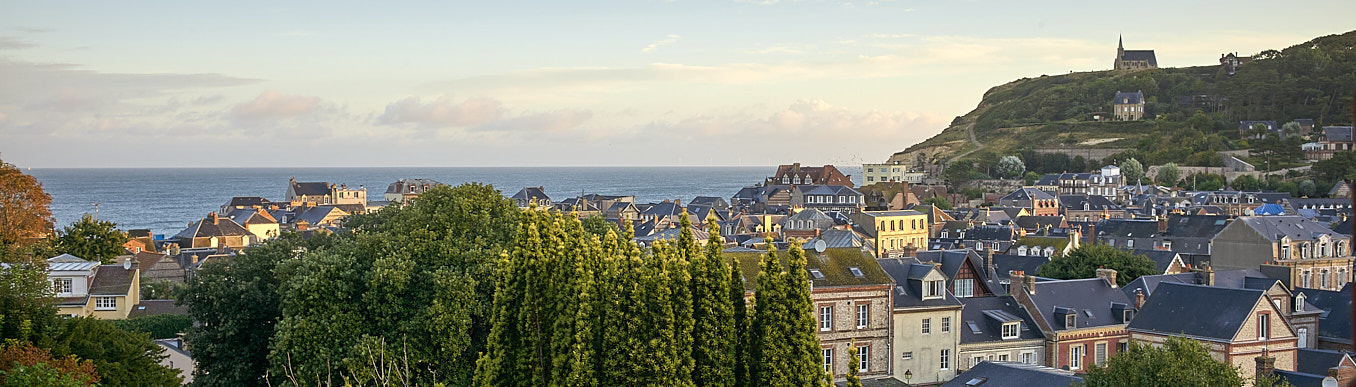
une fin d'été en normandie ... along with a side-trip to brittany
Josie & Wolfgang
Austria, November 2025
By the time you read this we are back from our summer holidays in the north-west of France. After spending our vacation in our home country for several years, it was about time to make new plans for 2025. We have chosen to travel the Normandy, one of the most beautiful regions in France. Fourteen wonderful days on a road trip, touring from Paris to the Seine-Maritime, along the coastal regions of the Calvados and Manche including a quick side-trip to Cancale in Brittany, and from there across the Orne and Eure regions to Giverny at the Seine river before our return trip to Vienna.
Besides the breathtaking landscapes, what impressed us most in Normandy was the relaxed lifestyle of its lovely people and, of course, the delicious French cuisine. Everything fell into place naturally, and everywhere we went, we received a warm and hospitable welcome. Merci!
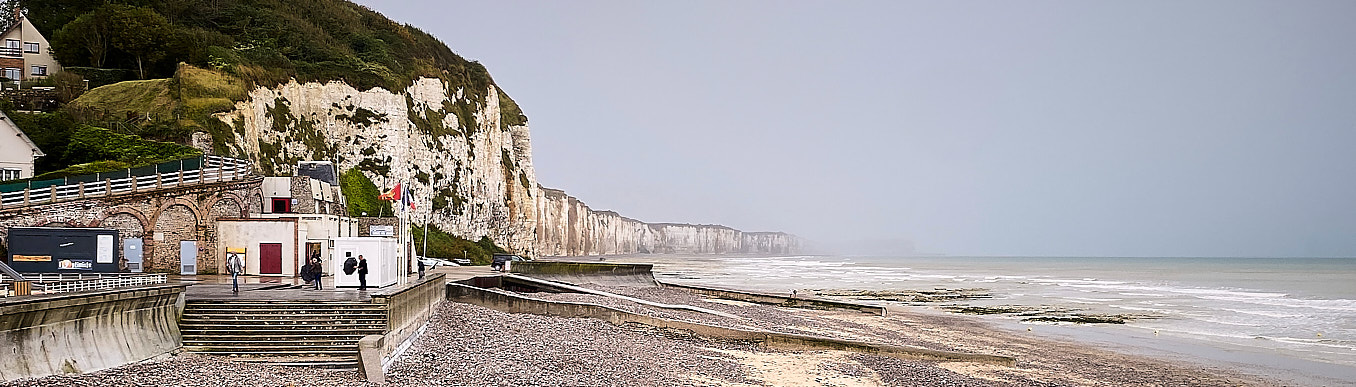
Seine-Maritime
The bright cliffs of the Alabaster Coast, the linen fields of the Plateau de Caux, as well as the meanders of the Seine river are among the scenic highlights of the Seine-Maritime department, which stretches between the lower reaches and the mouth of the Seine river near Le Havre and the northernmost part of the Normandy on the English Channel.
We've pitched our tent in the Castel de la Terrasse B&B on the hills of Etretat, a cozy small town between Fecamp and Le Havre from where we could conveniently reach lovely places at the Alabaster Coast, as well as Honfleur, Trouville-sur-Mer and Deauville in the Calvados department. Once being in Etretat for several days, one shouldn't miss a visit to the seaside village Veules les Roses north-east of Fecamp on the way to Dieppe, which is known as one of the most beautiful villages in whole France. A day-trip to Veules-les-Roses can be conveniently combined with taking Fecamp along the way or with an extended trip to Dieppe.
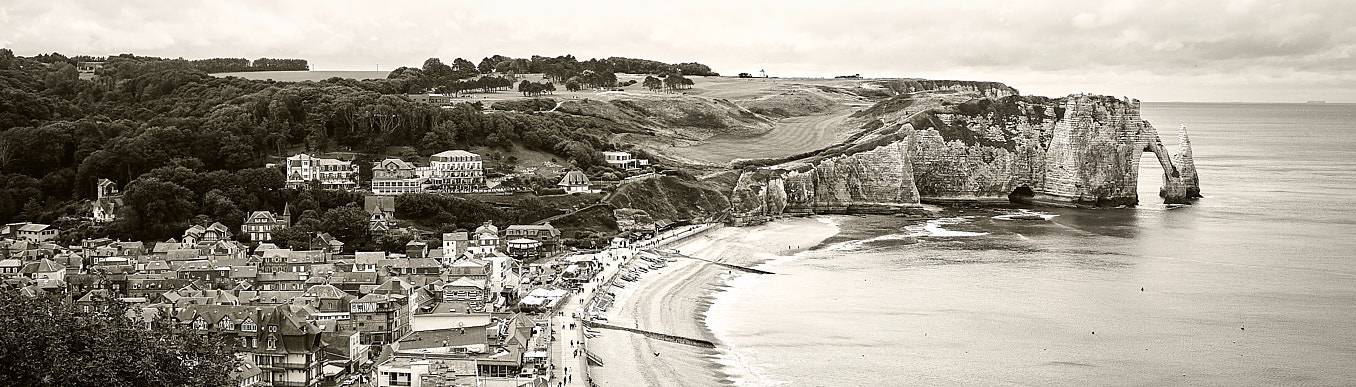
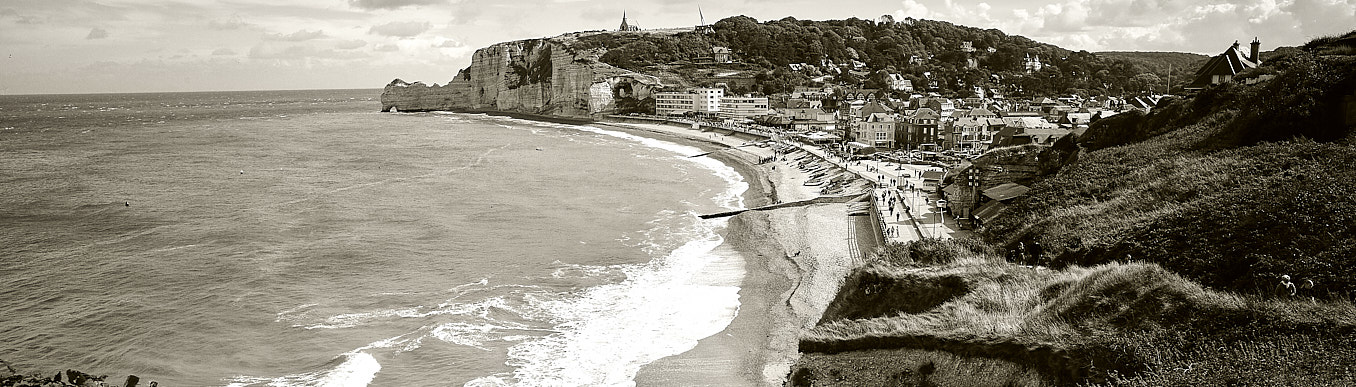
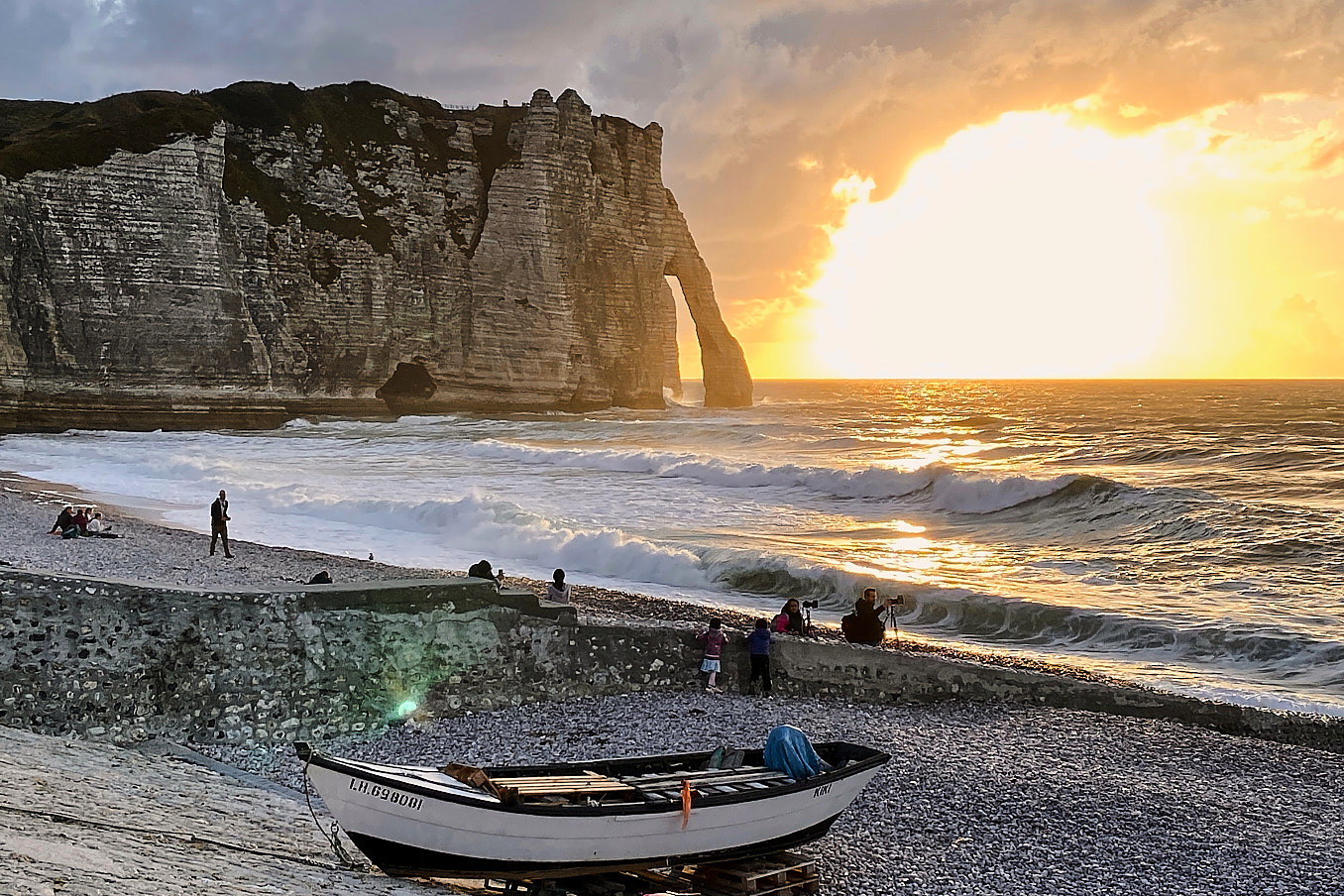
Etretat's seafront is flanked by two massive cliffs, both beautified by spectacular arches naturally formed in the limestone by the erosion of wind and waves, bearing witness to the geological past of the cliffs of Etretat. The Amont cliff, towered by the Notre-Dame-de-la-Garde chapel, which is regarded as the protector of fishermen, offers a breathtaking panorama. It has its own arch, which reminds to an elephant plunging its trunk into the water. The cliff of Aval is even more impressive, with its monumental arch and its 55 meter high needle. The panorama of Etretat's coast, which is truly among the most picturesque landscapes we've seen so far, has inspired many painters and writers alike.
Due to its rich history, Étretat is more of a tourist destination than a quiet one, but in September, outside of peak season, it wasn't crowded at all, but rather very pleasant.
From the late 19th century onward, Étretat became increasingly popular as a summer residence among Parisian artists. At the beginning of the 20th century, the French actress Madame Thébault had her villa built in a dramatic location high atop the windswept Amont cliff. She named it "La Roxelane" and, inspired by this striking location, whose cliffs had been painted by so many artists, also created a large garden. A hundred years later, landscape architect Alexander Grivko discovered fragments of the garden and breathed new life into it by combining classical principles with contemporary artistic elements and decorations. The “Jardins d’Étretat” delight their visitors with a variety of shapes reminiscent of the waves of the English Channel, sea whirlpools, shells and the cliffs of the Alabaster Coast, and is now considered one of the most beautiful gardens in the world.
Lovers of classical music, in particular operettas, will surely know that Etretat was home to the German-born French composer and cellist Jacques Offenbach until he moved with his family to San Sebastian in the Basque Country in northern Spain, just before the outbreak of the Franco-Prussian War in 1870.
Estelle, the owner of the the Castel de la Terrasse B&B, is an elegant Frenchwoman straight out of a storybook and a great host. She gave us a very warm welcome and provided us with valuable tips and advice, which places in the region we should visit and - important for us - where to eat in and outside Etretat.
Among the restaurants Estelle recommended, we particularly liked three of them in Etretat. "La Flottille", a popular restaurant a few hundred meters from the seafront, known for its lively atmosphere and friendly service, attracting guests with the grilling of meat and fish over a wood-fired oven in a cozy ambiance; the fruit de mer restaurant "L'Huitriere" directly at the seafront, not only for its excellent seafood and oysters, but also for the smile and friendliness of the waitress Sandy – if we're not mistaken concerning her name – who was always cheerful and entertaining in perfect English and gave us excellent advice when ordering our dishes and, last but not least, we've enjoyed the inviting, colourful eatery "Le Bel Ami" opposite the street of the La Flottille, which is a ticket for Mediterranean-inspired cuisine.
Etretat attracts also enthusiasts of Arsène Lupin, the fictional gentlemen-thief, a master of disguise, a hit with the ladies and defender of justice even he's on the wrong side of the law, who defeats and steals only from the rich or bad in the novels written by Maurice Leblanc. Bookworms who’ve read Leblanc’s novel "The Hollow Needle" will call to mind Etretat’s stunning cliff formations featured in the novel, including the famous hollow needle at the cliff of Aval, which, in the novel, is housing the most fabulous secret treasures of the Kings of France.
Admirers of Leblanc’s novels about Arsene Lupin can visit Le Clos Arsène Lupin, Leblanc’s old home in Etretat, converted into a museum dedicated to the gentleman-thieve.
Calvados
The elegant seaside resorts Deauville, Trouville-sur-Mer, Cabourg, the picturesque harbour town Honfleur and other small towns at the trendy Côte Fleurie, the region Pays d’Auge as kind of backyard of the Côte Fleurie and heart of the Cidre, Calvados and Camembert production, the forests and canyons of the Norman Switzerland where the Calvados borders the Orne department, a region which offers a multitude of outdoor activities as well as the Pearl Coast with the history-charged Ohama landing beaches make the Calvados department a fairly diverse region of varied terrains and landscapes, each equally attractive in its unique way.
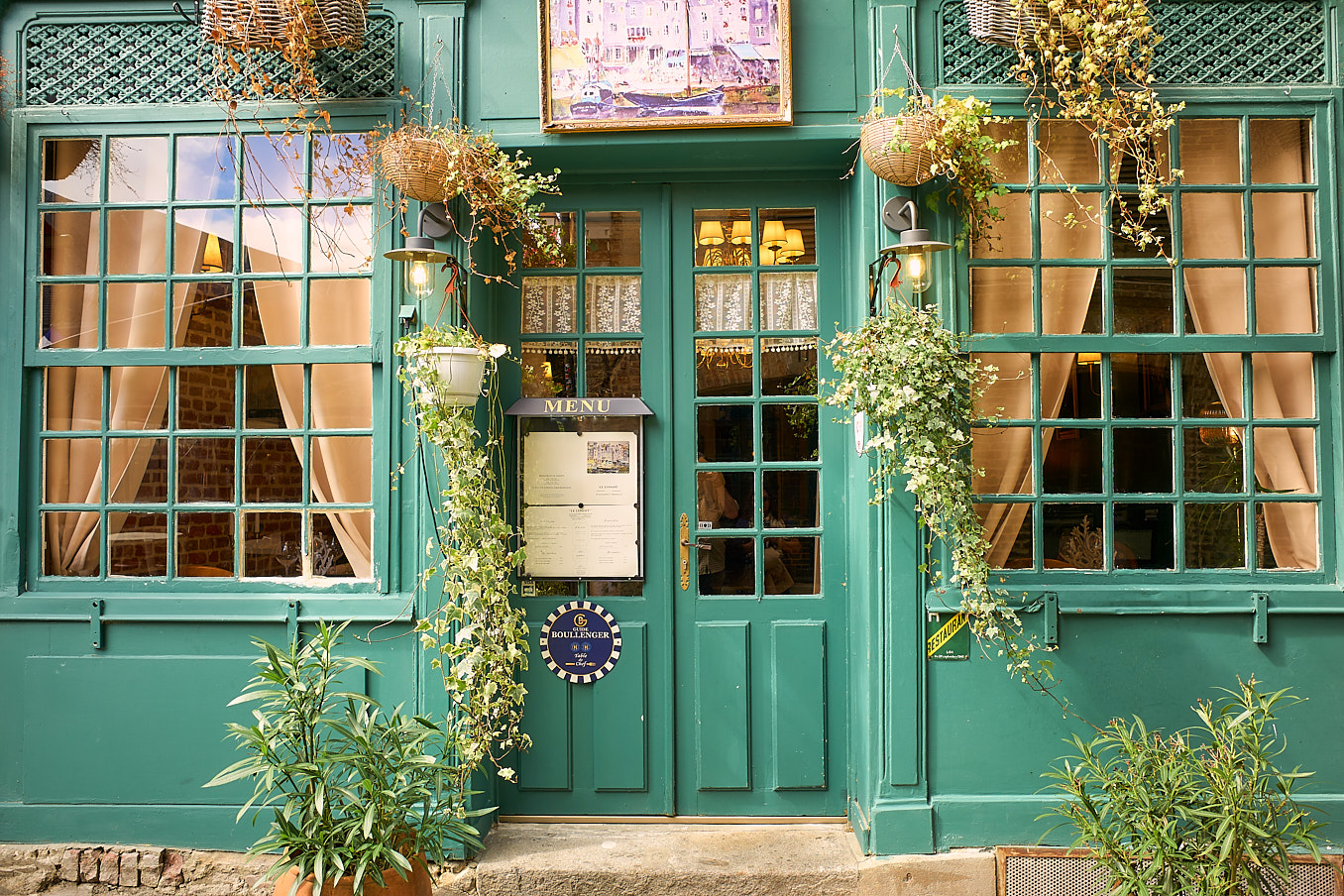
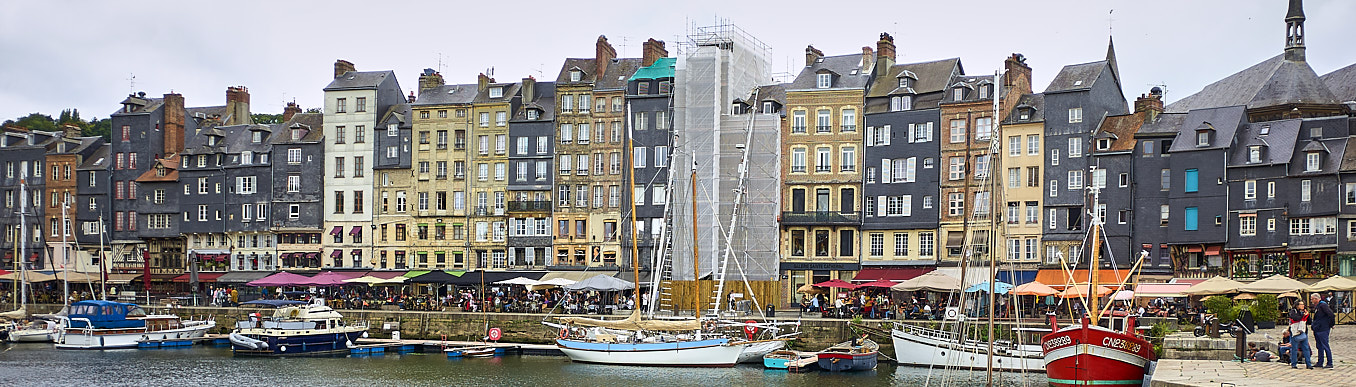
Besides of rather calm places to absorb the Normans' everyday life, our tours in this region of course included Honfleur, Le Havre, Trouville-sur-Mer, Deauville and Pont-L'Eveque (Calvados Experience), each of which features its own, unique character and vibe that attracts holidaymakers and one-day visitors alike.
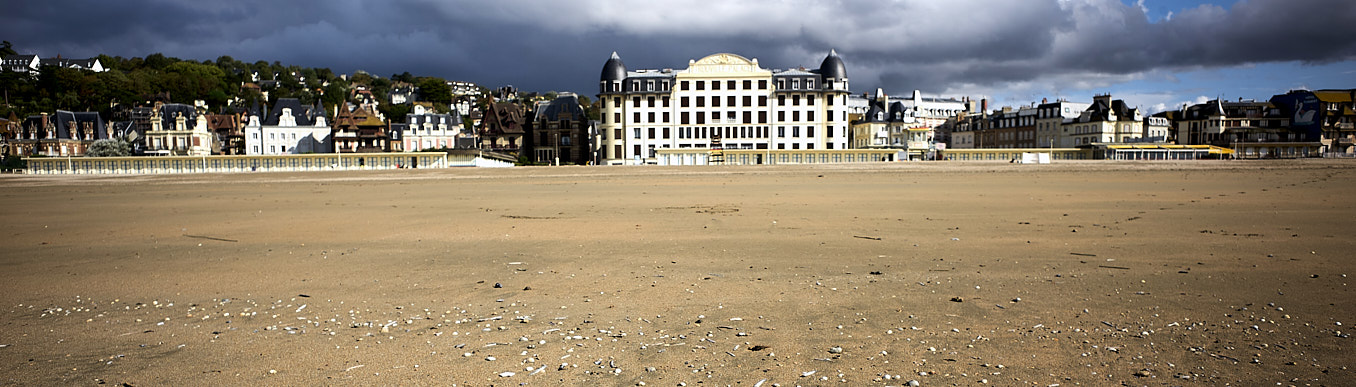
The Côte Fleurie is among the popular tourist areas in France as it offers seaside resorts for every taste, interest and budget. Ranging from the elegance and glamour of the Belle Époque in Deauville, known to be chic, flamboyant, expensive and as a mecca for horse traders, leisure facilities like golf courses, wellness hotels, horseback riding, horse racing or playing polo all year, to the family oriented children's paradise Blonville-Sur-Mer, eleven towns with own identities line up on this coastal stretch like an overdose of the senses.
Well, after spending four days in Etretat and touring the region from Veules les Roses to Deauville it was time to start on our way to our next destination Reville, a coastal village in the Cotentin in the Manche department, facing the English Channel.
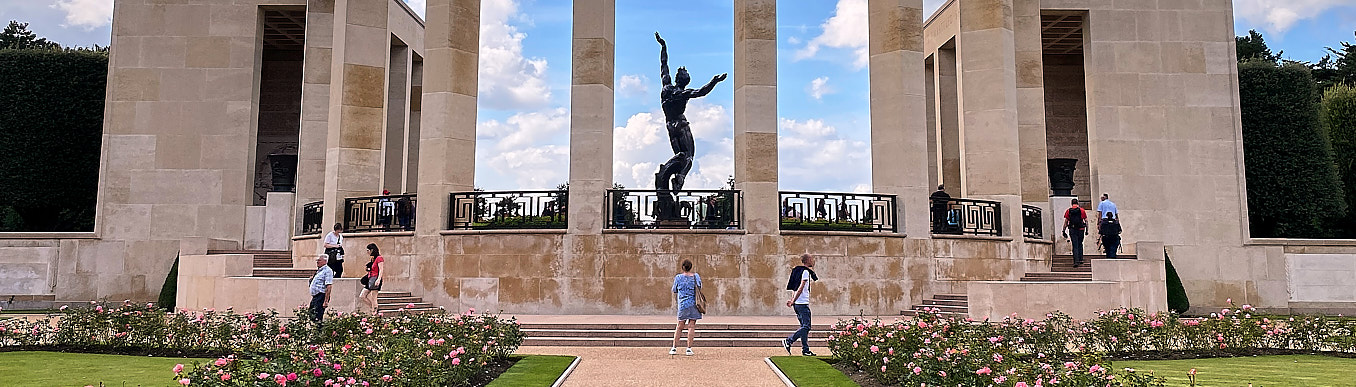
Our travel route took us via Honfleur along the Côte Fleurie to the Ohama beach and the "Normandie American Cemetery & Memorial", where we stopped for some hours to visit this history-charged place. "Omaha" is the codename of an 8 kilometer coastal stretch that lies in front of the villages Vierville-sur-Mer, Saint-Laurent-sur-Mer and Colleville-sur-Mer. It was the landing sector of the United States' forces during the crucial D-Day liberation of Normandy. At this stretch of coastline, overlooked by the "Normandie American Cemetery & Memorial", visitors can learn of its profound significance and the stories of bravery during the D-day landings that shaped the course of Europe's history.
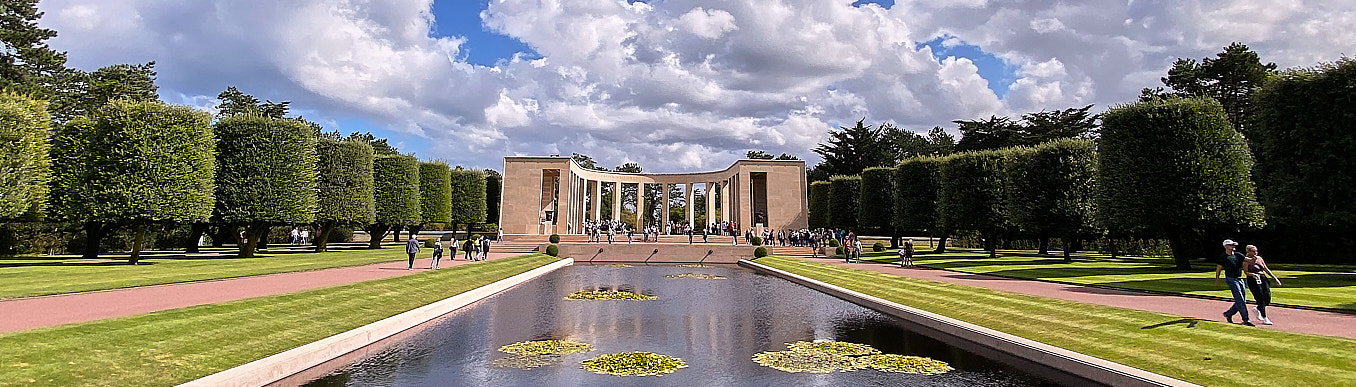
The Normandie American Cemetery & Memorial
Manche, Cotentin
Steep rocky coasts, wide sandy beaches, powerful tides, and blooming hydrangeas against weathered granite houses make the Cotentin Peninsula the harbinger to Brittany, bordering the Normandy in the west. Cap la Hague, the northern tip of the peninsula, is a secluded region, where picturesque granite villages alternate with lonely heathlands, expansive dunes, and idyllic coves sheltered by rocky outcrops. Our destination was the La Maison Gervaiserie & Spa in Reville at the east coast of the Cotentin.
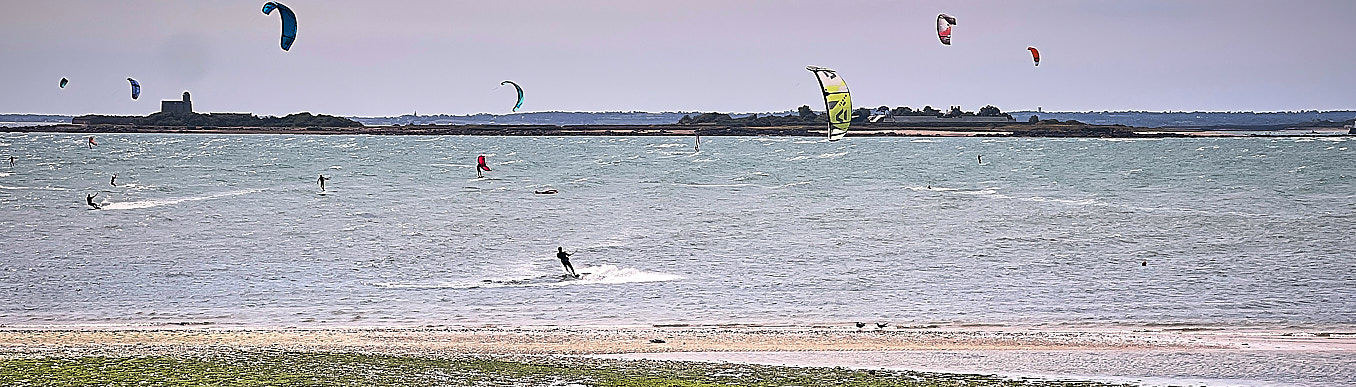
Only back in Vienna we have learned, that in previous times the Cotentin was almost an island since only a strip of land in the heath of Lessay connected the peninsula with the mainland until the marshlands were drained in the 18th and 19th century. Tidal gates, built in the Baie des Veys and on the west coast, close at high tide and open at low tide. At low tide, the gates open under the pressure of surface water from streams, rivers and rainwater, allowing it to drain away to the sea. When the tide comes in, the gates close under the force of the incoming tide, preventing seawater from flooding the land. Tidal gates can also be used in reverse function, however, in the Cotentin the aim is to drain wetland, prevent soil salinisation and avoid flooding of the land.
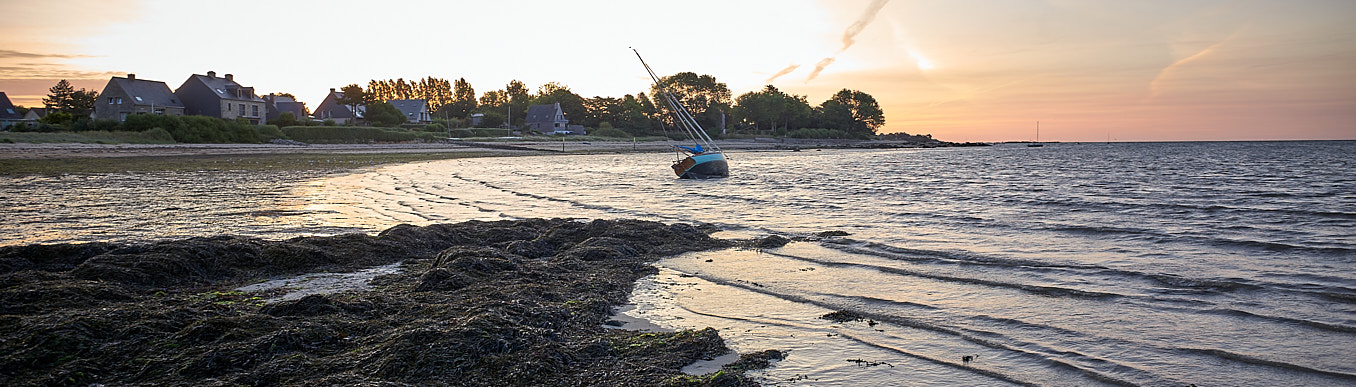
As we approached our destination Reville, we were reminded that one shouldn't rely too heavily on GPS navigation, especially in rural areas, where the country lanes in France can be really very narrow. A fairly long stretch of road between places named L'Epinay and La Bijude was so narrow that just one car could squeeze between the bushes and cornfields on either side. It was a sigh of relief when we finally left that four-kilometer stretch of road behind us with no oncoming traffic and eventually turned onto the road between Saint-Vaast-la-Hougue and Reville to spot again the horizon and the sea, shimmering in the afternoon Sun at the Baie des Veys.
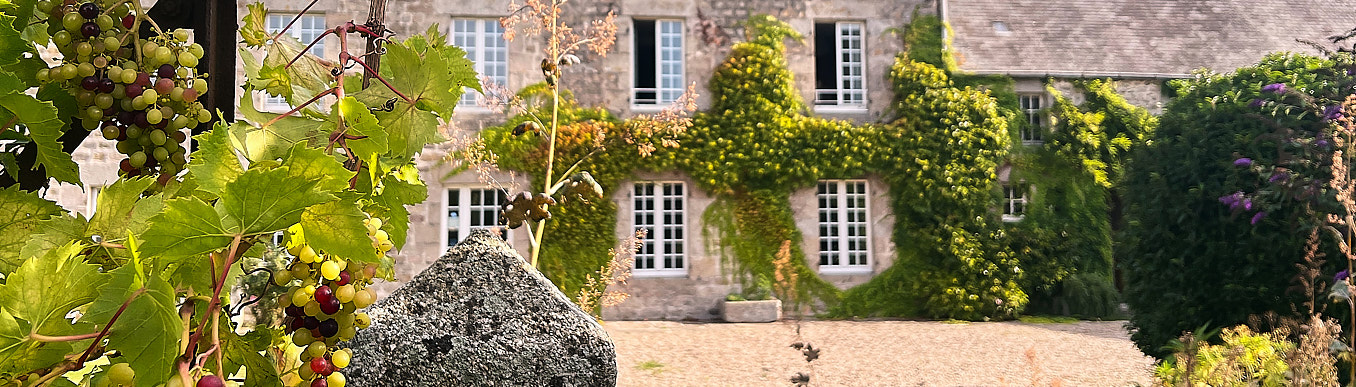
Our hostess Hélène, a young Frenchwoman who was already waiting for us at her B&B La Maison Gervaiserie, proved to be a very pleasant person with a warm and welcoming nature, which made our stay in her mansion unforgettable from the very first moment. It was a great pleasure to get to know Hélène, like seeing a friend we hadn't seen in a long time. The beautiful manor house is located in an attractive and easily accessible area of Reville close to the sea and the building harmoniously combines traditional architecture with a stylish, modern interior and spacious guest rooms.
In our room, we found a small restaurant guide with Hélène's recommendations for restaurants in the region. We discovered a wide variety of the french cuisine in Barfleur, Saint-Vaast-la-Hougue, and at Le Goéland Plage, right on the beach overlooking the Baie des Veys. Day after day, we were treated by a diverse selection of first-class oysters, excellent, fresh fish, the famous moules frites, and hearty steaks just to name a few things to make your mouth water, all of which we thoroughly enjoyed and, as we only found out back in Vienna, had eaten far too much - but with no regrets 😁.
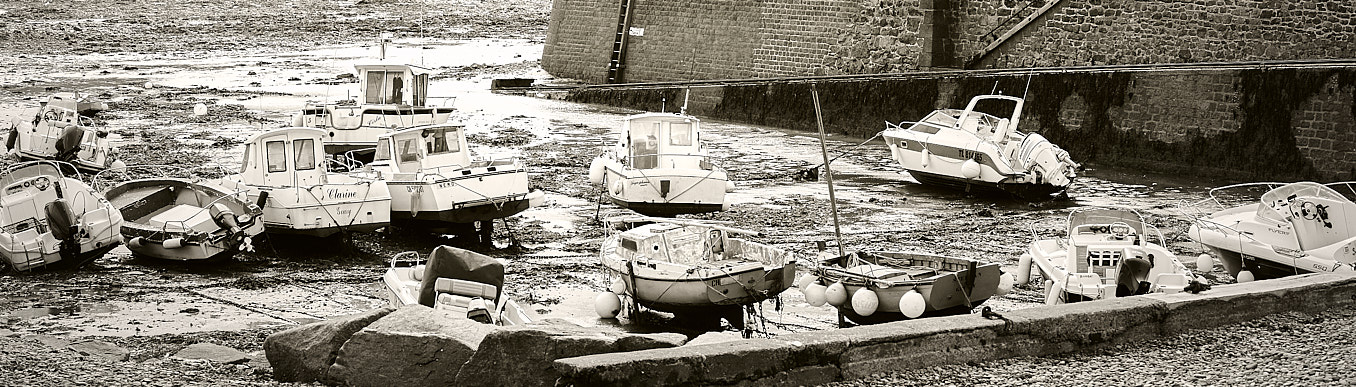
At the north-western tip of the Cotentin Peninsula lies the Cap de la Hague and the tiny village Goury. The lighthouse rises mightily from the sea, opposite the port and the coastguard lifeboat station with slipways for deploying rescue boats. The lighthouse is the gateway to the Gulf Stream and surely it would also offer a majestic sight in the midst of a heavy storm. With speeds of up to 20 km/h the drifts of the sea in this region can be pretty strong, therefore feared by sailors.
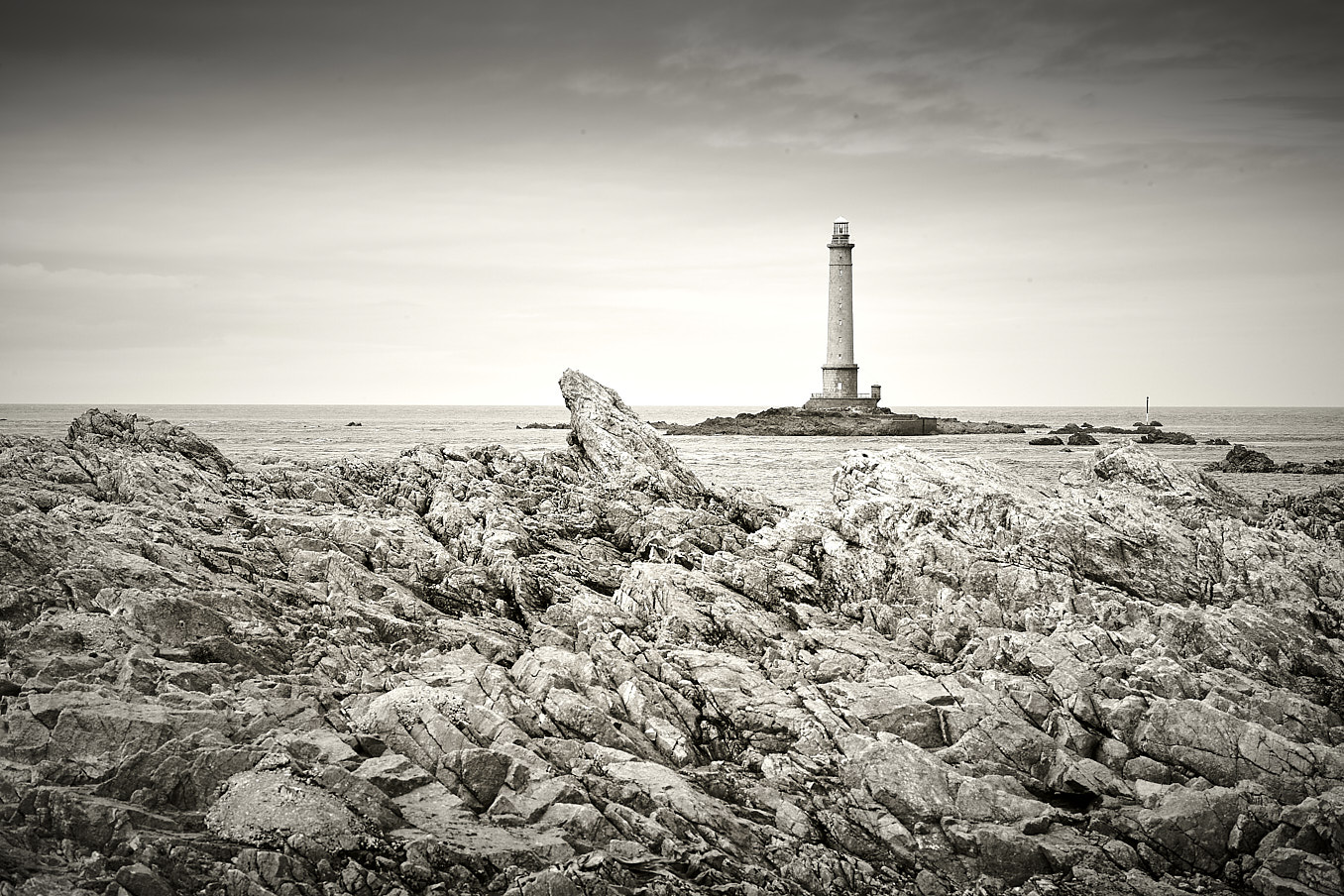
Cap de la Hague and Goury is secluded and even there are tourists visiting this place, it is still a quiet place, except for the sounds of mother nature's whirring of the wind, the sounds of the sea and screeching seagulls. Should you feel hunger, go and look for "Fish & Chips Goury" located in a building with a nice garden adjacent to the coastguard station - you simply can't miss it. The Fish & Chips and the beer they sell is exceptionally good!
On our way back to Réville, we took the small coastal roads and discovered some beautiful seaside villages, where we stopped for a cup of coffee and enjoyed gazing at the sea to dream the day away ...
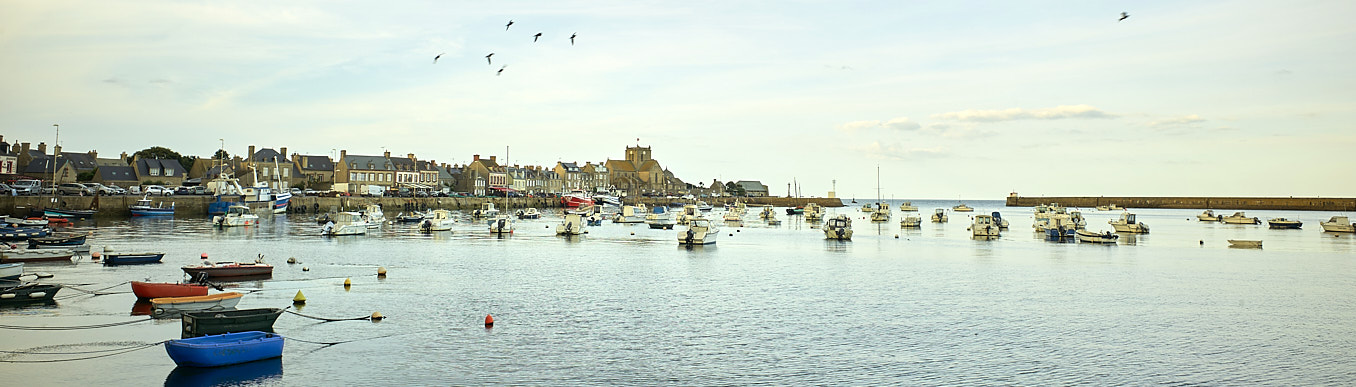
Barfleur and Saint-Vaast-la-Hougue, in particular, are two vibrant fishing villages where locals primarily go about their daily lives. Their harbours are always bustling with activity and when the trawlers come in you can watch the fishermen at work while fishing nets are drying in the Sun. Of course there are tourists, but in September, outside of peak season, it wasn't immediately obvious to be a stranger in these villages. It seems that visitors, not only in these villages but in the entire region, are mainly french people who blended seamlessly into the local culture – and that's a good thing.
The bustling weekly market in Saint-Vaast-la-Hougue, held every Saturday, was a feast for the senses and great street theatre that filled almost our entire day. If there's anything that embodies the heart and soul of a region, it's such open-air markets, full of life and as down-to-earth as the locals themselves. Entire families and elderly retirees throng the crowds, browsing the local goods and searching for the day's bargain. The bounties of all kinds of regional products are presented in a kaleidoscope of scents, spices, colors, shapes, and sizes.
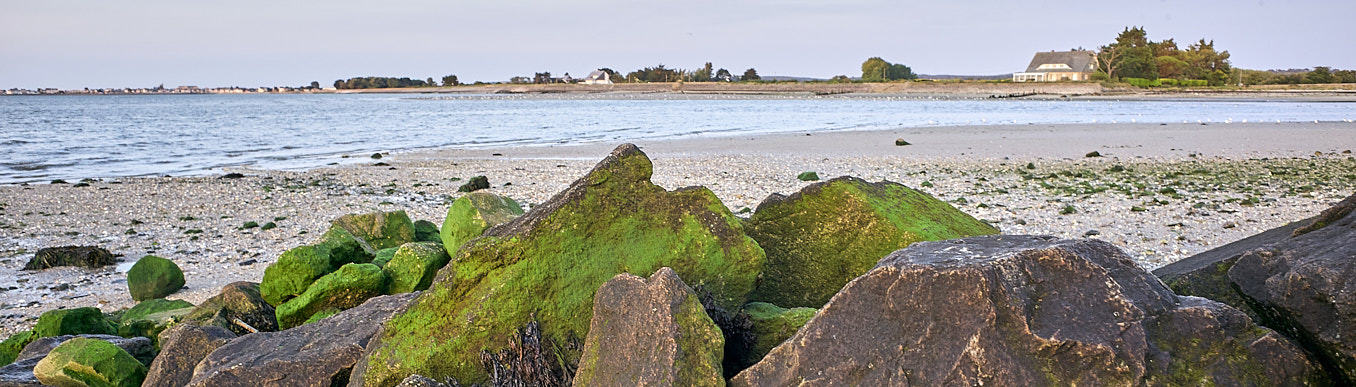
Unfortunately, our time in Réville was too short to fully discover the charm of the Cotentin Peninsula. But somehow we sensed that there might be a next time. After a warm farewell from Hélène and La Maison Gervaiserie, Hélène recommended that we stop at "La Maison Biscuit" in Sortosville-en-Beaumont on our way to Genets – and boy did we stop pretty damn quick when we saw that shop!
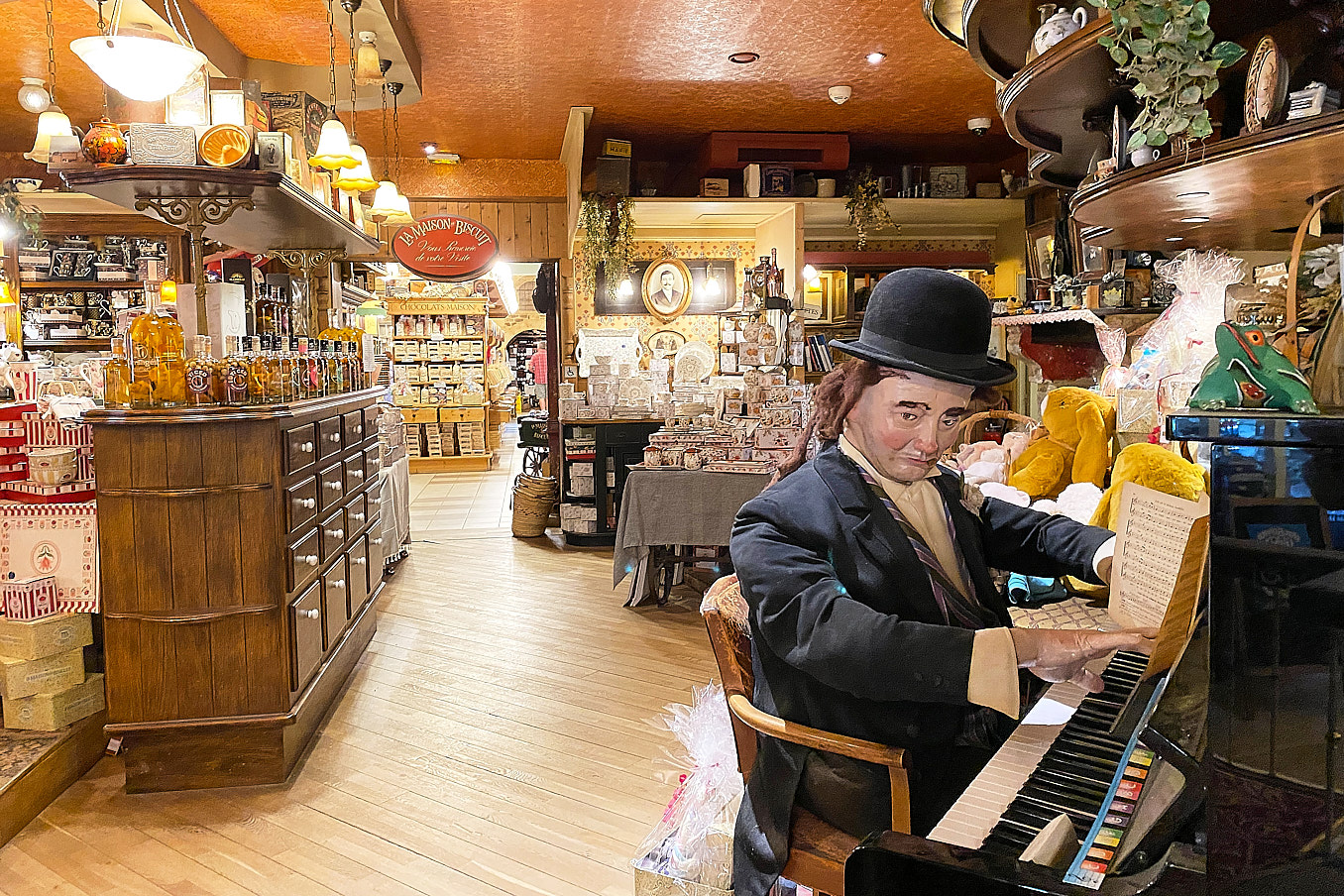
Incredible, what a beautiful oasis of culinary delights! Inside and out, it exudes a nostalgic charm that transports you straight back to the 1920s or 30s. It's brimming with delicious treats. Inside, each of the numerous rooms is lovingly decorated with meticulous attention to detail. Some might find it a bit over-decorated, but that's exactly what a traditional shop like this needs. Besides delicious biscuits, caramel bars and chocolates, they offer alcoholic beverages including of course Calvados, savory foods, jams, tea and coffee, ham and salami, pickles of all kinds – and the list goes on. You can easily browse everything from one little room to the next without ever leaving the building. The prices at this well-known establishment reflect the excellent quality of the products, but if you buy some of the treats to take home, you're guaranteed compliments from family and friends!
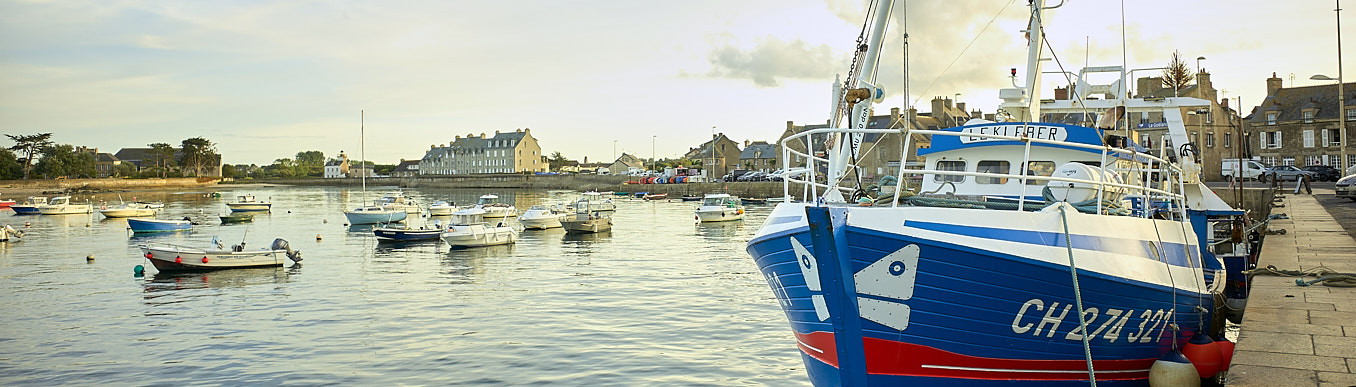
Later, in Giverny during the last days of our trip, as we reflected on our experiences in Normandy, we realized that the Cotentin Peninsula, especially the coastal area between Saint-Vaast-la-Hougue, Réville, Barfleur, Cherbourg and the regions extending to Cap de la Hague, as well as the Côte des Havres, a coastal area on the west coast of the Manche department, had become one of our favourite parts of Normandy. Here, away from larger cities like Cherbourg, we were able to feel and absorb the relaxed atmosphere of this charming province, which – unsurprisingly – was certainly influenced by the sweetness of doing nothing, but simply enjoying our time, the laid-back culture of the locals, the magnificent landscapes, the sea and the delicious French cuisine.
Manche, Bay of Mont-Saint-Michel & Cancale in Brittany
Mont-Saint-Michel and its bay was, of course, one of the highlights on our journey.
In this southern part of the Manche department, we received a warm welcome from Ana-Maria and François at their idyllic estate, Clerval, in Dragey-Ronthon. The location is ideal: the property lies near the heart of the Bay of Mont Saint-Michel and is a perfect base to sightsee also other attractions in that region of Normandy and even parts of Brittany.
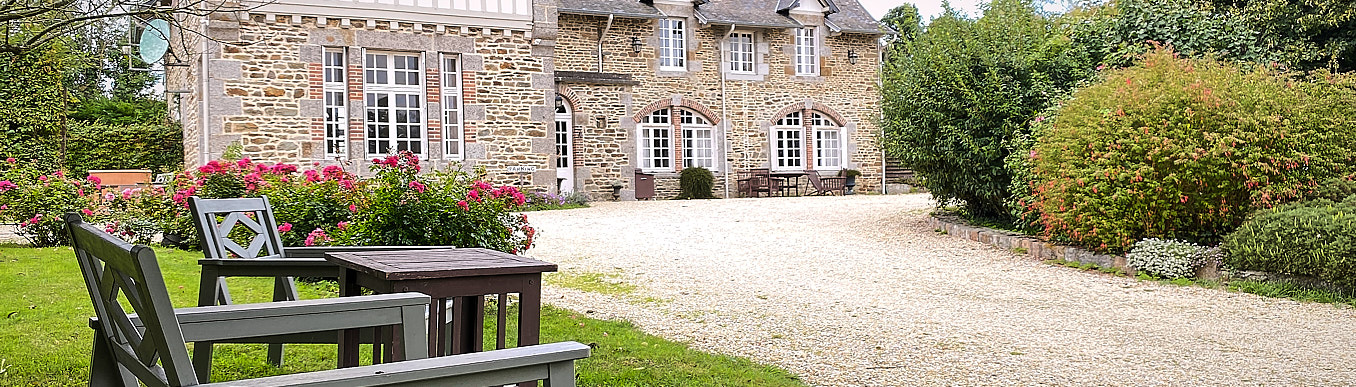
Situated near the coast in a broadleaf woodland between the villages of Genêts and Dragey, it is near points which offer magnificent views of the bay and Mont Saint-Michel. Besides the elegant and comfortable bed and breakfast rooms, Clerval also offers two studios in the garden. Mont Saint-Michel is just 25 minutes away by car, and Granville to the north can be reached in half an hour. François and Ana Maria are not just great hosts, both are also certified guides in the bay and offer guided walks in German, English, Spanish, and French language.
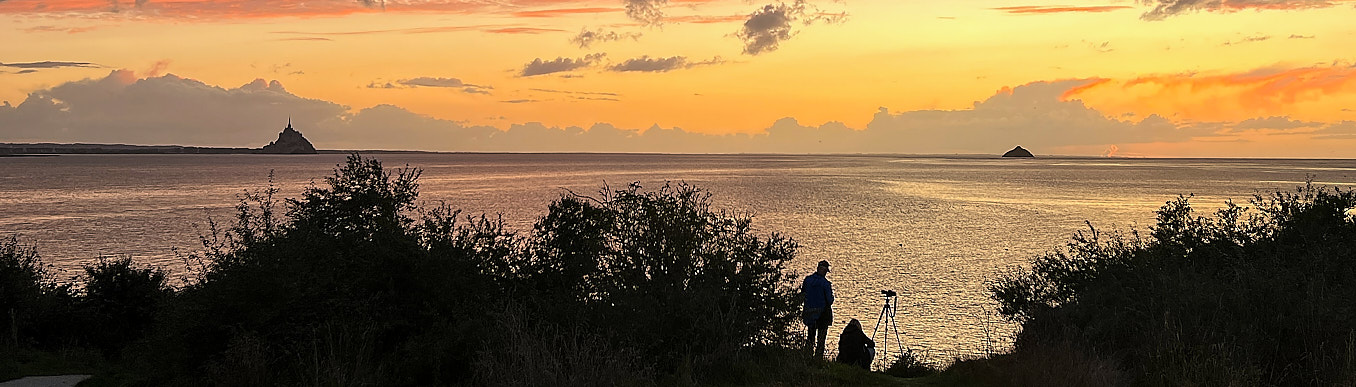
To enjoy a picturesque view of Mont-Saint-Michel during rising tides, François recommended to be no later than 7:30 p.m. at the Le Grouin du Sud viewing point just five kilometers south of Genets. His tide schedule was perfect.
This rocky outcrop located at the east side of the Mont Saint-Michel Bay is a small headland that offers breathtaking views, when during the high tides Mont-Saint-Michel seems to take a bath in the sea, lit by the warm orange Sun setting at the horizon behind.
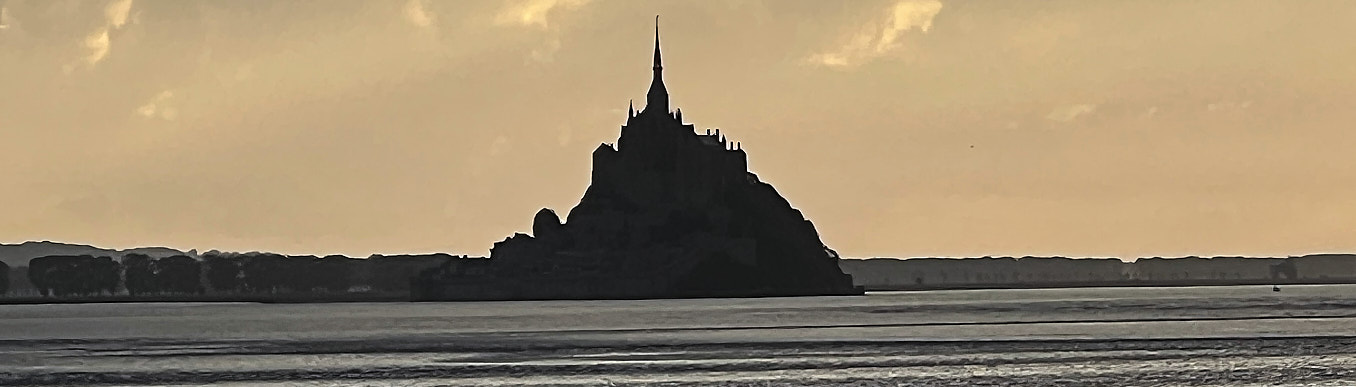
From that point, a magnificent panorama opens up before you: from the costal bay area, where the rivers Sélune and Sée meander in a silver glare to empty into the bay and a variety of birdlife can be observed, all the way to Cancale in the Brittany, taking in Mont Saint-Michel bay along the way. The mount of Mont-Saint-Michel looms around four or five kilometres away and if you’re lucky, Mont-Saint-Michel presents itself during a spectacular sunset with dramatic cloud formations - and on mist-free evenings the coastline lights up in a beautiful dusk glow.
A side-trip to Cancale - what a "coincidence" that we love eating oysters ...
Genets is an ideal location to conveniently reach the costal stretch of the Bay of Mont-Saint-Michel where the Normandie borders Brittany, which is home to Cancale, the capital of oyster farming. On our way to Cancale, known for its world-famous oysters that are considered among the best in France, over time the style of houses changed from half-timbered houses to robust stone houses, which apparently suits better to the more rough climate predominant in Brittany. Our intent behind that tour was clear, to combine a flying visit to Brittany with tasting of the delicious, fresh oysters harvested in Cancale. It was worth it - believe us.
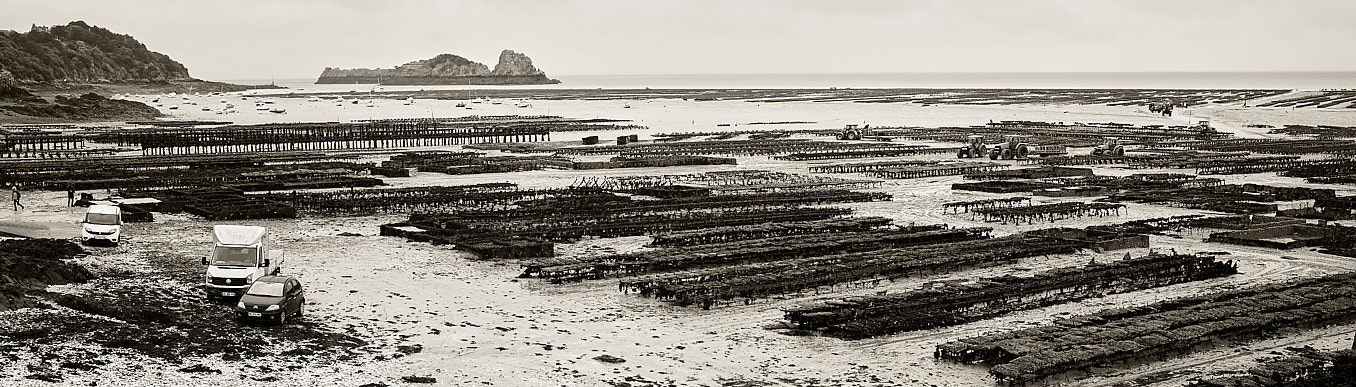
When approaching Cancale it was low tide and we could see oyster beds as far as the eye can see and boats were sitting tilted to the side on the sandy bottom of the harbour Port de la Houle. This small seaside town at the beginning of Brittany’s Emerald Coast has been farming oysters since the Roman times. Once at Port de la Houle, one should not miss the Marché aux Huîtres, the oyster market of Cancale behind the second jetty. At the market you can enjoy the finest Cancalaises oysters and follow the established ritual, which is slurp the oysters and throw back the shells onto the beach. We were not the first doing this and certainly not the last ...
Should you want to delight in oysters accompanied by a glass of wine while enjoying the view to the port and the Bay of Mont-Saint-Michel, we'd highly recommend to visit the "L'Atelier de L'Huitre" - une petit restaurant de fruits de mer - at 15 quai Gambetta. No fuzz, just the very best oysters.
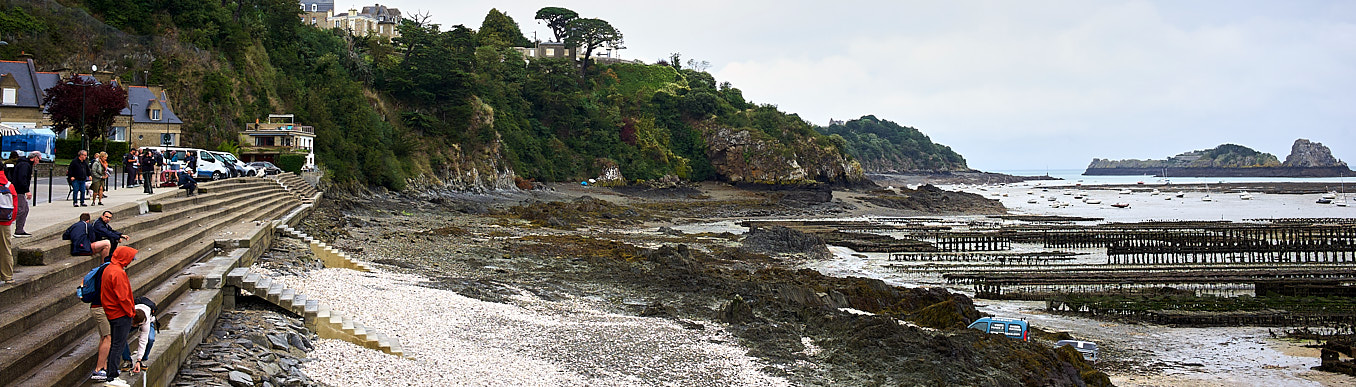
The Bay of Mont-Saint-Michel is formed by a depression extending over 500 square kilometres, which experiences the second-largest tidal range in Europe, from 10 to 11 metres on average and up to 16 metres during the equinox tides if it comes together with a spring tide. During rising tides the water streams at a speed of around 6 km/h, therefore visitors crossing the mudflat to reach Mont-Saint-Michel by foot are well-advised to hire a certified guide.
Interestingly, often people are not aware how the tides work just in principle. When asked the admittedly tricky question, whether, at high tide, the water rises towards the observer or the observer moves towards the water, people appear confused by this question. Although, the very question makes some people suspicious as to whether their existing knowledge is correct or complete. The common, but inadequate, answer is that the water rises because of the moon's gravitational attraction.
While this answer isn't entirely wrong, it is based solely on our intuition or perception as self-centered Earthlings - and far from reality. After all, humanity also believed for thousands of years that the Earth was the center of everything.
If you would like to find the answer to this question and read more interesting facts about the tides, you will find them at the end of this travelogue.
Giverny sur-la-Seine
With a touch of melancholy, we had to depart from B&B Clerval for our final destination in France, the village Giverny nestling at the Seine river, home of the world-famous French painter Claude Monet, who lived there from 1883 until his death in 1926. We spent two nights at the Jardin des Plumes, a wonderful hotel in a half-timbered Anglo-Norman building from 1912, just a short walk from Claude Monet’s house. This hotel is surrounded by a beautiful garden, houses a Michelin-starred restaurant and is run by very kind and attentive personnel.
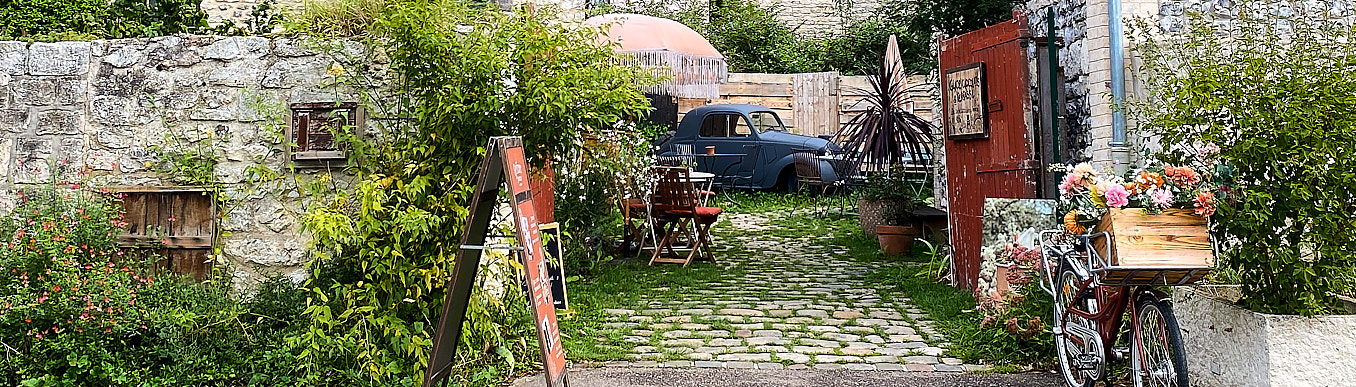
Giverny is all about the famed painter Claude Monet, founder of the impressionism and seen also as a key to modernism, but it also reminds of his friend and later son-in-law Theodore Earl Butler (1861–1936), an American impressionist painter who for some time stayed at the famous Hotel Baudy in Giverny. The Hotel Baudy became the hub for many American expatriates at that time and Butler was a key player and link between the American Colony and Claude Monet.
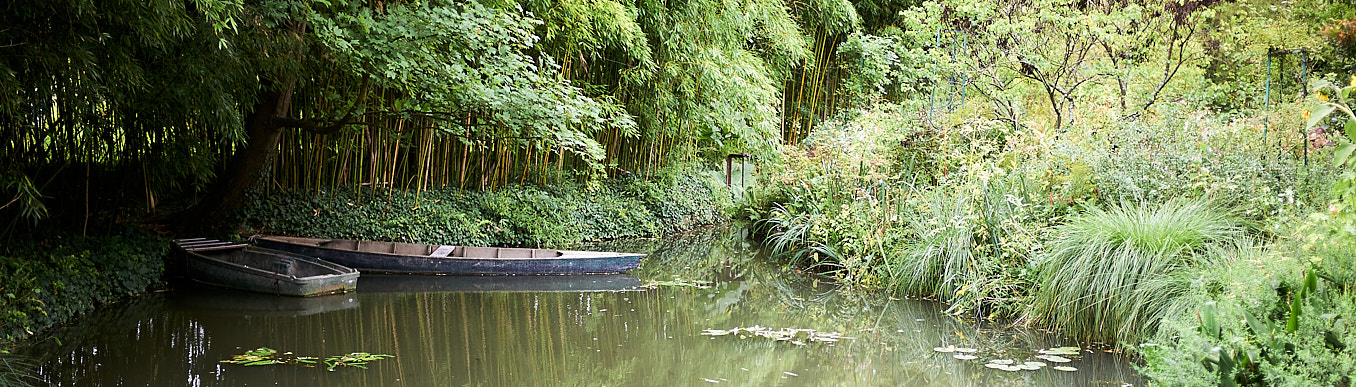
Claude Monet's inspirational garden
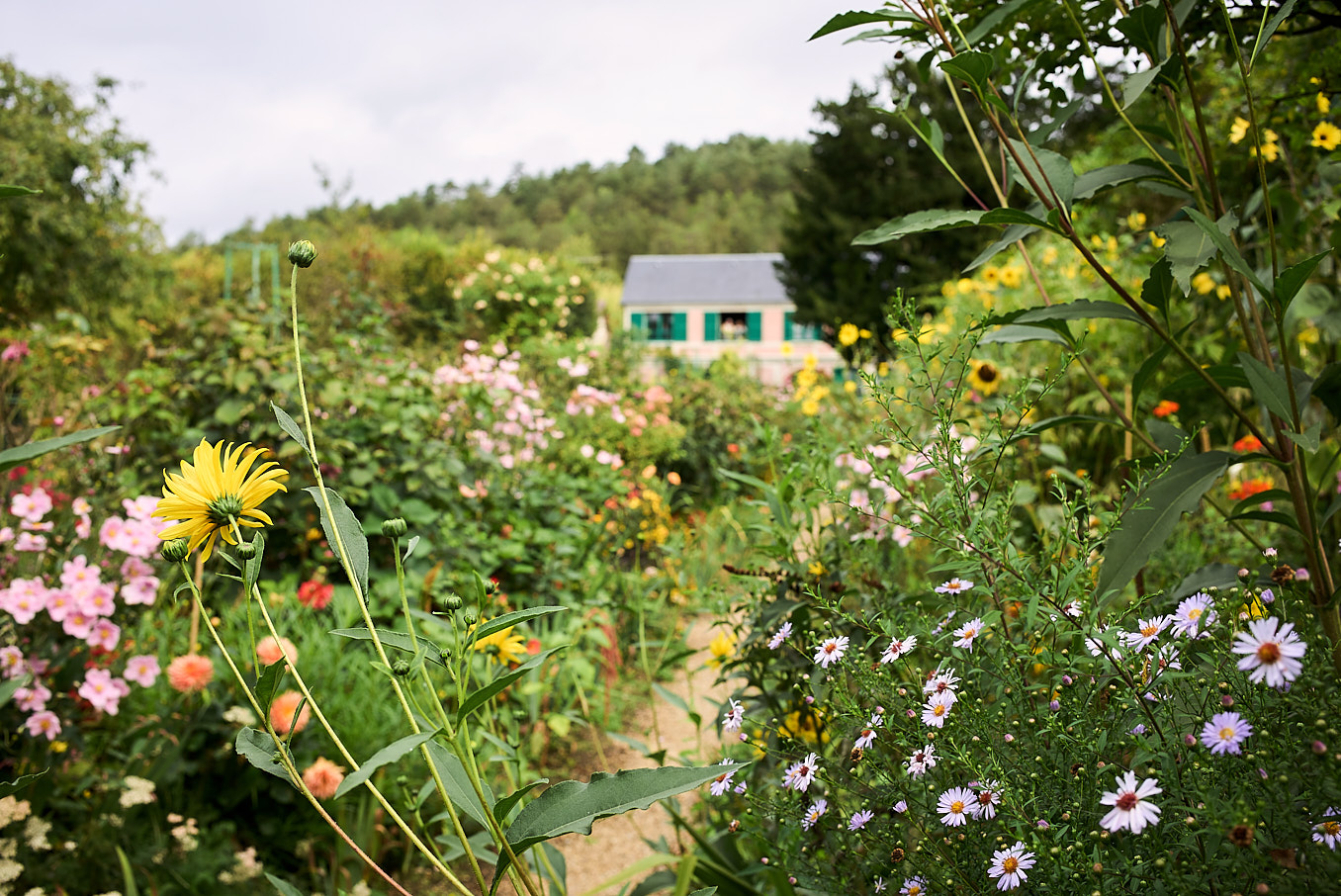
Giverny, on the banks of the Seine, achieved worldwide fame through the paintings of Claude Monet. Even today, the village retains the charm of Monet's time, and his spirit is ever-present – particularly in its picturesque garden with its water lily pond, the Japanese bridge, and lush flower-lined avenues, which delights visitors from all over the world. This beautiful setting inspired Monet to create some of his most famous works.
Well, this concludes our wonderful trip through Normandy in September 2025, from which we brought back many great impressions and memories to Vienna. Our decision to spend our vacation in this part of France was absolutely the right one, and we hope to return someday.

Interesting facts about the tides:
To fully understand the tides on the oceans and especially to calculate tidal cycles is a quite complex matter, even for physicists and astronomers. Nevertheless, often people are not aware how the tides work just in principle. When asked the admittedly tricky question, whether, at high tide, the water rises towards the observer or the observer moves towards the water, people appear confused by this question. Although, the very question makes some people suspicious as to whether their existing knowledge is correct or complete. The common, but inadequate, answer is that the water rises because of the moon's gravitational attraction.
While this answer isn't entirely wrong, it is based solely on our intuition or perception as self-centered Earthlings - and far from reality. After all, humanity also believed for thousands of years that the Earth was the center of everything.
Place of origin, cause and magnitude
The tides originate in the oceans and spread towards the coasts, where they appear – only subjectively perceived at our position on the shore – as a regular rise and fall of the sea level.
Major cause for the tides is the gravitational attraction of the Moon and the Sun, as well as their constellation at a given time, whereas the gravitational attraction of the Moon is predominant due to its proximity to the Earth (gravitational attraction varies inversely to the square of the distance between two objects). This gravitational attraction causes tidal forces on our planet, especially in the oceans. Other causes of the tides include the fact that the Earth wobbles while it revolves on its axis, the inertia of the water due to the Earth's wobble, and the property of water as an incompressible and highly flexible fluid.
Our Earth isn't a smooth, perfect sphere covered with water, but a rugged body of varied formations. Complex coastlines, shores and beaches in many different forms, strangely shaped bays and irregular ocean depths and the topography of the seafloor are cause for considerable variations in the magnitude of tides and the speed of tidal streams. These variations range from areas with barely noticeable, insignificant tides, like in the mediterranean sea, and even non-tidal areas, to places where dramatic tidal magnitudes occur, like in the Bay of Fundy in Canada, which has the highest tides in the world reaching 15 meters, or in the Bay of Mont-Saint-Michel in France.
How the tides work
To understand and describe how the tides work in principle, it is important to refer not only to tides, but to "tidal bulges" - and here is why:
Because of the above-mentioned gravitational attraction and consequently the tidal forces that act on our planet, basically two tidal bulges occur on our planet's oceans, a larger bulge on the side facing the Moon and a smaller one on the side facing away from the moon. These two tidal bulges are fact and the reason, why on most costal areas (there are some exceptions) we can observe two high tides and two low tides every 24 hours and 50 minutes (i.e. a lunar day or tidal day, respectively is 50 minutes longer than a solar day, because the Moon orbits the Earth in the same direction as the Earth revolves on its axis).
Both tidal bulges exist at all times, are aligned with the Moon's position and follow the Moon on its orbit around the Earth, let's say during a month (let's keep it simple and forget for a moment the specific terms and numbers, that 27,3 days correspond to a sidereal month and 29,5 days to a lunar month). Just as a side note, in reality, the tidal bulges don't exactly align with the Moon's position, as the Moon lags slightly behind the tidal bulges, or in other words, the high tide bulges are a little ahead of the moon. This is due to friction, which causes the Earth's rotation to partially drag water along, and is also the reason why the Earth's rotation is slowing down over time.
While these two tidal bulges follow the Moon's position, the Earth rotates once a day on its axis, therefore, the Earth's landmasses rotate through the tidal bulges. An observer on the shore thus typically crosses two tidal zones per day, meaning that most coastal regions, with a few exceptions, experience four tides within 24 hours: a high tide, a low tide, another high tide, and another low tide, at intervals of approximately 6 hours and 12 minutes.
The answer to the original question is therefore: the water does not rise toward the observer on the shore, but rather the observer moves in and out of the existing water, that is, through the existing tidal bulges.
The tidal bulge on Earth's far side from the Moon
Now, the above doesn't explain yet the reason for the second tidal bulge on Earth's far side from the Moon, which contradicts our intuition, since after all the Moon's gravitational pull is the major cause for the tides on Earth and - as every human knows - we have only one Moon! Interestingly, the explanations by various sources vary, although each in their own way seems to be plausible. Well, according to my interpretation it is (or may be) a combination of several reasons for the second tidal bulge on Earth's far side from the Moon.
(1) For example, the fact that tidal force (in the astronomical sense) is the difference in gravitational attraction, and that gravitational attraction weakens with increasing distance, leads to bodies being attracted unevenly and consequently being stretched or lengthened in the direction of the attractive force (tidal phenomena). While the moons gravity tugs strongest on the side of the Earth that faces it, which pulls the oceans up into what's called a tidal bulge, at the same time another tidal bulge forms on the planet's opposite side, which seems like gravity defying behaviour. The reasons for this behaviour are outlined in the next two points. The gravitational field of the Sun influences the tides on Earth too, but to a lesser amount because of the much bigger distance between the Earth to the Sun than from Earth to the Moon. Nevertheless, the Sun is a reason why the tidal strength on our oceans varies with the phases of the Moon.
(2) The Moon's gravitational force acts on every single point of Earth's matter. In a simplified illustration, the vectors of the Moon's attraction at Earth's equator point horizontally to the Moon's center. These vectors at the North and South Poles, however, point at an angle to the Moon's center. As we learned in physics class, vectors acting at an angle can be resolved into their components in the x-y plane. This means that in addition to the force along the x-axis, at both poles a partial force acts along the y-axis towards the Earth's center, thus pushing water towards both, the side of the Earth closest to the Moon and the side farther away, which alters the distribution of water in our planet's oceans, also on the Earth's far side from the Moon.
(3) Another important reason for the second water bulge at Earth's side far from the moon should lie in the fact that Earth's axis is not stationary, it kind of wobbles. The Moon doesn't simply orbit around the Earth as we commonly think, but Moon and Earth orbit about their common center of mass, called barycentre. The Earth-Moon-Barycenter lies, due to Earth's vastly greater mass compared to that of the Moon, within the body of the Earth on average around 4.671 km from Earth's center (Earth's radius is 6.378 km). Due to this wobble of the Earth, the water on Earth's surface facing away from the Moon is dragged away outwards because of its inertia and contributes to the second tidal bulge.
I have come across these three reasons for the second tidal bulge on the far side of the Earth from the Moon in various, to me credible sources, although each source only mentions just one reason as the sole explanation. Since any of the above reasons seems plausible to me, I am inclined to believe that the second tidal bulge is caused by the interplay of all three.
In the words of NASA, "speaking more technically, what you’re really seeing is a cycle of small changes to the distribution of our planet’s oceans". To understand and visualise the cause of tides and how they work, you can find more profound explanations and animations on this NASA webpage about tides.
If you want to dive deeper into the phenomena of the tides on our oceans, I also commend the webpages of the "National Ocean Service" about Tides and Water Levels.
Back to Cancale / Bay of Mont-Saint-Michel
 New Content
 About this Website
 Lounge
 Top of page